Reticular creasing machine for perfect die-cutting without dies
Extreme precision for a clean fold with no cracks
Die creasing is essential for achieving a sharp, professional fold, especially with heavyweight boards, laminated brochures, or photographic paper.
This technique uses the same blade-and-matrix system found in die-cutting machines, delivering exceptional accuracy and consistency. Unlike traditional scoring, die creasing produces clean, crack-free results across a variety of paper types, finishes, and fibres – with minimal setup and excellent repeatability.
During the process, the material is precisely aligned before the creasing blade presses it into a matrix. The depth and width of the crease can be fine-tuned by repeating the process or adjusting in decimal increments.
The same die-based mechanical technology also enables both continuous and step perforations – ideal for tear lines, detachable sections, or “coupon-style” finishes.
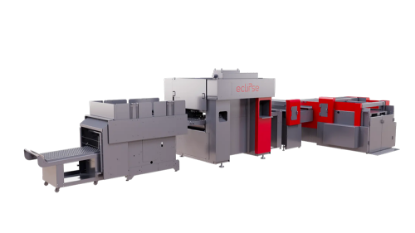
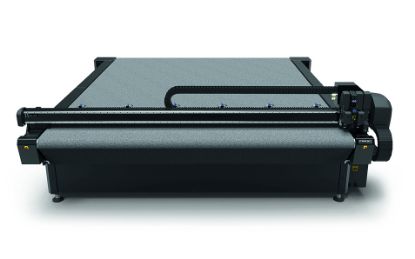
New Eclipse Junior: perfect die-cutting without dies
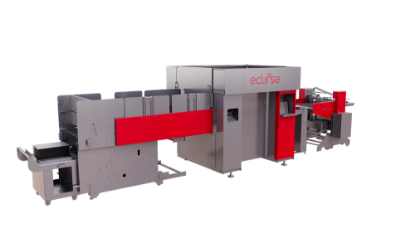
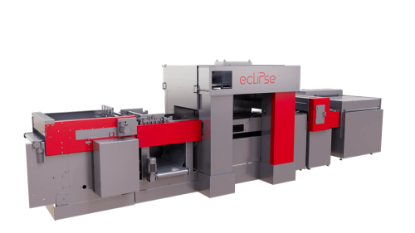
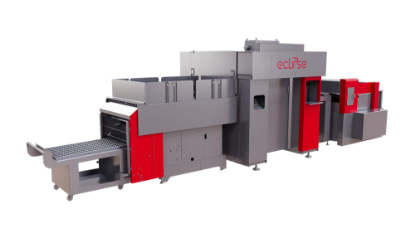
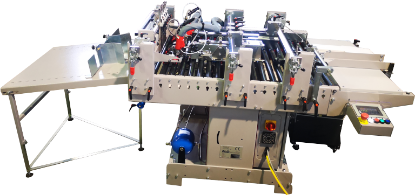
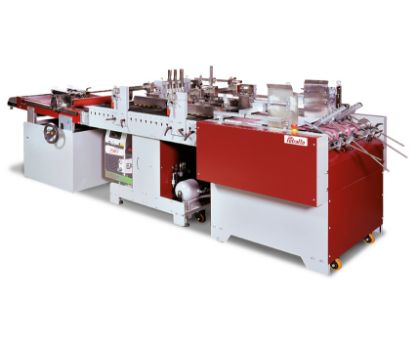
The new Eclipse Junior introduces an innovative creasing technology that allows die-cutting with no tools required. It creates a grid of high-quality, linear creases across the full sheet, perfectly aligned with the folding lines of the printed layout.
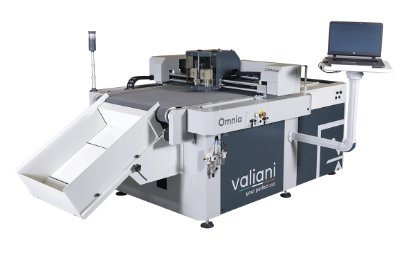
After creasing, only cutting and minor secondary creases are needed – performed by a plotter or cutting device (including laser systems). The result is a perfectly finished product, ready for sale from the very first copy.
KEY BENEFITS
- With a low investment, Eclipse Junior offers on-demand print & packaging capabilities when paired with one or more plotters.
- Enables fully automated job changeovers for small and micro production runs.
- Delivers perfect die-cut quality even in low volumes.
- Speeds up delivery times dramatically.
- Doubles plotter productivity by offloading the creasing work.
- Eliminates the need for costly prototypes (first run is sellable).
PROCEDURE
Step 1: Input
The positions of the creases can be detected from the PDF file or, if provided, from the barcode / QR code printed on the sheet or manually by numerical input of the position of the creases. Suitable for both packaging cartons and commercial jobs such as covers, brochures etc.
Step 2: Start
From the stack feeder, sheets are separated by suction cups and advanced by a suction belt.
Step 3: Movement
The motion of the sheet is controlled and synchronized by two independent motorized wheel systems, plus a double continuous readout of the sheet’s effective path.
Step 4: First dynamic self-recording
Two sensors detect the position of the sheet via the edge thanks to the specifically printed marks.
Step 5: First parallel creases
The motors, with automatic self-registration, position the sheet under the creasing blade, repeating the operation in rapid succession for all parallel creases.
Step 6: Rotation
The two motors, with synchronous motion, rotate the sheet 90°, positioning it in the center of the creasing area.
Step 7: Second dynamic auto-register
Two sensors detect the position of the sheet through the edge by specially printed marks.
Step 8: Second perpendicular creases
The motors, with automatic self-registration, position the sheet under the creasing blade, repeating the operation in rapid succession for all parallel creases.
Step 9: Output
Creased sheets can be sent directly to plotter or folding machines, via in-line system or manually.






.png)
